Top 5 Trends in Cable Assembling That Will Shape the Future of Connectivity
In today's rapidly evolving technological landscape, the importance of connectivity cannot be overstated. The cable assembling industry stands at the forefront of this transformation, playing a crucial role in enabling reliable and efficient communication across various sectors. According to recognized expert in the field, Dr. Emily Chen, "The future of connectivity relies heavily on advancements in cable assembling technologies that can meet the demands of increasingly complex systems." This statement reflects the urgency for innovation in cable assembling as we look towards a more interconnected world.
As we move into an era where smart devices, IoT, and high-speed data transfer become commonplace, the trends emerging within the cable assembling sector are set to redefine how we connect and communicate. From the integration of eco-friendly materials to the rise of automation in production processes, these developments promise to enhance efficiency, reduce costs, and support sustainability initiatives. Understanding these trends will not only prepare businesses for the next wave of technological advancement but also position them strategically within the competitive landscape of connectivity solutions.

Emerging Materials in Cable Assemblies Enhancing Performance and Durability
Emerging materials are at the forefront of revolutionizing cable assemblies, significantly enhancing their performance and durability. One notable trend is the incorporation of high-performance polymers that not only reduce weight but also offer exceptional resistance to high temperatures and harsh environmental conditions. These materials enable manufacturers to design cables that withstand more rigorous applications, making them ideal for industries such as aerospace and automotive, where reliability is paramount.
Additionally, advancements in composite materials are proving to be game-changers in the cable assembly landscape. By combining different materials, manufacturers can create assemblies that boast improved tensile strength and flexibility without compromising on weight. This innovation allows for more compact designs that can easily navigate tight spaces while maintaining robust functionality. As these emerging materials continue to evolve, they will undoubtedly play a critical role in shaping the future of connectivity, providing solutions that meet the growing demands for efficiency and durability in various applications.
Top 5 Trends in Cable Assembling That Will Shape the Future of Connectivity
This chart illustrates the top five trends in cable assembling, showcasing how emerging materials are enhancing performance and durability.
The Impact of Automation on Cable Assembly Efficiency and Production Costs
The advent of automation in cable assembly has significantly transformed the industry, enhancing efficiency and reducing production costs. Automated systems, such as robotic arms and smart assembly lines, enable manufacturers to increase their output without compromising on quality. By minimizing human errors and streamlining repetitive tasks, automation not only accelerates production timelines but also ensures a higher standard of precision in cable assemblies. This shift towards mechanization allows companies to meet the growing demand for complex cable systems in various sectors, from telecommunications to automotive industries.
Moreover, the implementation of advanced technologies, such as Artificial Intelligence and Machine Learning, in automated cable assembly processes is further optimizing operations. These technologies can analyze data in real-time, enabling predictive maintenance and reducing downtime. As a result, manufacturers can save on labor costs and allocate resources more efficiently, ultimately leading to lower price points for consumers. As automation continues to evolve, its impact on production efficiency and cost-effectiveness will undoubtedly shape the future landscape of connectivity in an increasingly digital world.
Sustainability Practices in Cable Manufacturing and Their Market Implications
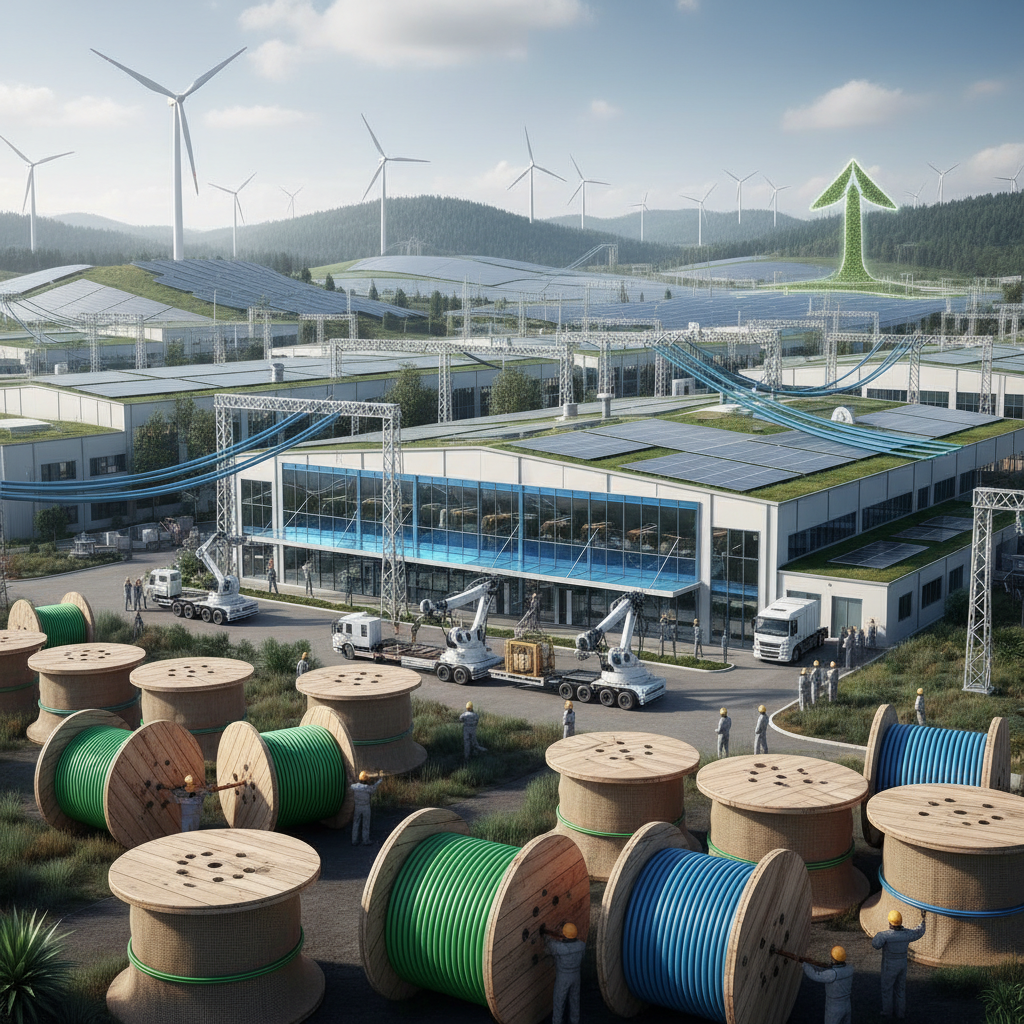
As sustainability becomes a pivotal concern across industries, the cable manufacturing sector is increasingly embracing renewable energy sources and sustainable practices. According to a recent market report, the demand for eco-friendly cables is projected to grow significantly, with an estimated compound annual growth rate (CAGR) of over 10% through 2028. This shift is largely driven by the rising adoption of renewable energy, such as solar and wind, which necessitates advanced connectivity solutions.
Fiber expansion is also accelerating as industries adapt to remote work, augmented and virtual reality, and the rise of cloud-based applications. Recent studies have indicated that the global demand for fiber optic cables is expected to reach 70 million kilometers by 2025. These advancements not only support high-bandwidth requirements but also align with the industry's goals of reducing carbon footprints. By integrating sustainable practices, manufacturers can enhance their market position while contributing to a more environmentally friendly future.
Shifts in Data Transmission Technologies Driving Cable Design Innovations
The landscape of data transmission technologies is evolving rapidly, driven by innovations in cable design. One of the notable trends is the increasing adoption of Active Electrical Cables (AEC), particularly in data centers and high-performance computing environments. AEC enhances the efficiency and stability of data transfer by integrating signal processing capabilities directly within the cabling. This advancement not only improves bandwidth but also addresses latency issues, paving the way for a more reliable connectivity future.
As we look ahead, the flexibility in cable design, particularly in the Flexible Flat Cable (FFC) sector, is projected to reach a market value of $496.8 million by 2025, expanding to $644.1 million by 2033. This growth signifies an increasing demand for compact and efficient cable solutions that can support the high data transfer rates required in modern electronics.
Tips: When selecting cables for your projects, consider the type of application and the required data transmission speed. Always evaluate the compatibility of your devices with emerging standards, like USB-C, which aims to standardize connections across various devices, thereby reducing electronic waste and enhancing user convenience. Embracing such trends can lead to more sustainable and efficient connectivity solutions.
Top 5 Trends in Cable Assembling That Will Shape the Future of Connectivity
| Trend |
Description |
Impact on Cable Design |
Future Outlook |
| Increased Data Speeds |
Demand for faster data transmission requires advanced materials and cable designs. |
Development of cables with higher bandwidth capabilities. |
Shift towards innovations like fiber optics and high-frequency cables. |
| Sustainability Practices |
Focus on eco-friendly materials and production methods in cable manufacturing. |
Use of recyclable materials and reduction of waste in cable assembly. |
Growing importance of sustainability in business strategies. |
| Smart Technology Integration |
Integration of smart technology in cable systems to enhance performance. |
Cables designed to support IoT applications and real-time data transfer. |
Future cables will increasingly facilitate smart grids and smart cities. |
| High-Performance Connectors |
Development of specialized connectors to enhance connectivity and reduce signal loss. |
Introduction of advanced connector materials and designs. |
Increased demand for reliable connections in critical applications. |
| Modular Cable Systems |
Shift towards modularity for easier upgrades and maintenance. |
Designing cables that can be easily reconfigured. |
Facilitates faster implementation of technological advancements. |
The Role of Industry 4.0 in Transforming Cable Assembly Processes and Connectivity
The advancement of Industry 4.0 is fundamentally reshaping cable assembly processes, leading to enhanced connectivity and increased efficiency. Automation and data exchange are at the forefront of this transformation, allowing for real-time monitoring and adjustments in production. Smart factories equipped with IoT devices enable manufacturers to collect vast amounts of data, fostering an environment where predictive maintenance can prevent costly downtime. This evolution not only optimizes the assembly process but also significantly enhances product quality and consistency.
Moreover, the adoption of advanced manufacturing technologies, such as robotics and artificial intelligence, is streamlining cable assembly. These technologies facilitate precision in assembly tasks, reducing human error and accelerating production timelines. With the integration of digital twins, manufacturers can simulate and analyze operations in a virtual space, enabling them to identify areas for improvement before implementing changes on the production floor. As a result, the cable assembly industry is poised to meet the growing demand for sophisticated connectivity solutions driven by the increasing complexity of modern technology.