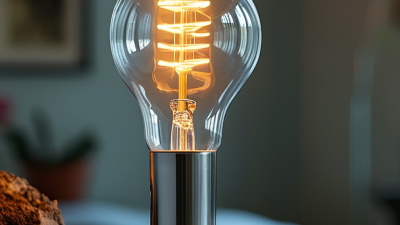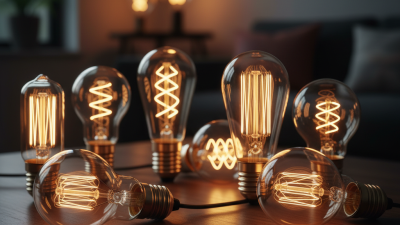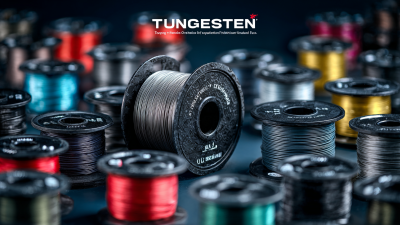
Choosing the correct Tungsten Filament is more than matching a wire to a lamp socket. The filament must survive intense heat, repeated thermal cycling, and mechanical stress. Its diameter, coil pitch, length, and tungsten purity directly affect brightness, resistance, and service life. A small dimensional error can change operating performance noticeably.
A reliable choice begins with the application. Identify the required voltage, wattage, color temperature, operating atmosphere, and expected lifespan. Then compare these requirements with the manufacturer’s technical datasheet. Experienced engineers also examine filament shape, support spacing, sag resistance, and recrystallization behavior. A tightly wound coil may provide compact heating, while a larger pitch can improve heat distribution in certain designs. The best option depends on the complete assembly, not the wire alone.
Real-world testing remains essential. Even accurate calculations can miss vibration, uneven heating, or manufacturing tolerances. That uncertainty matters. Inspect the filament under magnification, measure its resistance, and test it through controlled heating cycles. Record temperature changes and visible deformation. Do not rely only on appearance. A bright filament is not automatically a suitable one.
Material traceability also supports dependable decisions. Request composition data, dimensional tolerances, inspection records, and applicable quality certifications from established suppliers. Avoid choosing solely by the lowest price. A cheaper filament may create unstable output or early failure. This guide explains the practical factors behind selection, while acknowledging that no universal filament fits every design. Careful comparison, documented testing, and informed professional judgment lead to a safer and more consistent result.
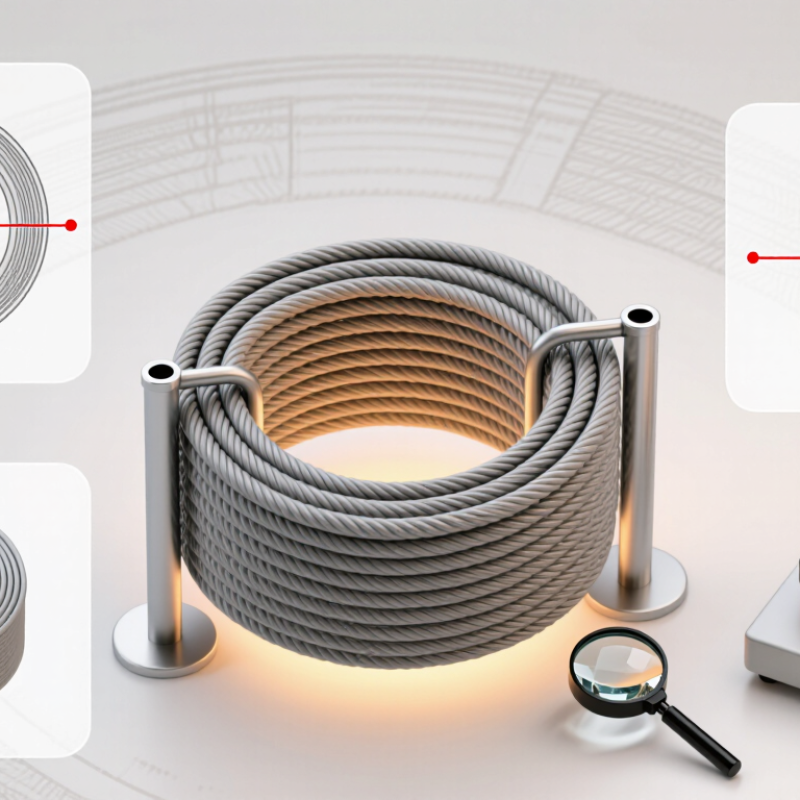
Define the Application Requirements for the Tungsten Filament
Start with the operating conditions, not the filament shape. Record the rated voltage, current, wattage, socket size, and available space. Then define the required brightness and color temperature. The U.S. Department of Energy reports that traditional incandescent lamps typically produce about 15 lumens per watt. This low efficacy makes heat management essential. Measure the surrounding temperature, airflow, and fixture surface temperature before selecting the filament.
The U.S. Department of Energy reports that traditional incandescent lamps typically produce about 15 lumens per watt.
Consider the environment carefully. A tightly coiled filament can fit compact lamps, while a longer coil may create a broader visual glow. Specify vibration, switching frequency, dimming range, and target service life. The International Energy Agency has reported that lighting uses roughly 15% of global electricity, so efficiency should remain part of the decision. Still, efficiency is not the only requirement. Some applications need warm spectral output, rapid response, or a visible decorative filament. IEC 60432 provides relevant safety requirements for tungsten filament lamps, but project conditions may demand additional testing.
A common mistake is choosing by appearance alone. It looks right. It may fail under heat or vibration. Prototype testing at the actual voltage is therefore valuable, especially because filament life can change sharply with small voltage increases. Forecasts can guide selection, but real measurements should challenge them.
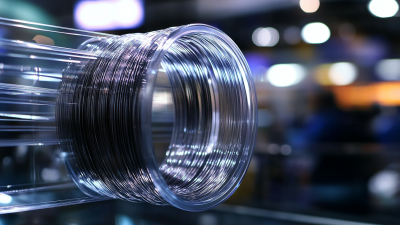
How to Choose the Right Tungsten Filament?
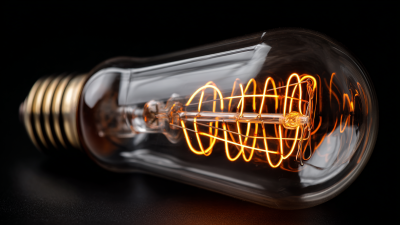
Filament choice starts with type, not appearance. Straight tungsten wire suits simple heating elements and compact laboratory fixtures. Coiled wire offers more surface area within the same length. Coiled-coil designs reduce heat loss and support higher operating efficiency in many lamps. They also demand tighter forming control. Small errors become visible after heating.
Shape affects temperature distribution. A tightly wound coil can create hot spots if its pitch is uneven. A wider pitch may improve airflow but increase radiant loss. NIST data places tungsten’s melting point near 3,422°C, yet practical operating temperatures remain lower because evaporation and sagging occur first. Geometry matters as much as the alloy.
Wire diameter controls resistance, strength, and warm-up speed. Thicker wire generally survives mechanical shock better, but it needs more current and heats more slowly. Thin wire responds quickly, although it can sag or fail during repeated thermal cycling. The USGS Mineral Commodity Summaries 2024 estimated global tungsten mine production at about 81,000 metric tons in 2023. Supply conditions still make efficient material use sensible.
For comparison, record wire diameter, coil pitch, free length, and operating current. Then test samples under the actual atmosphere. My own selection process is rarely perfect. A calculated design can still fail after vibration or mounting stress. That is why dimensional inspection and thermal testing should accompany every datasheet.
Operating temperature strongly affects a tungsten filament’s brightness, resistance, and service life. Higher temperatures produce whiter light, but they also accelerate tungsten evaporation. The filament becomes thinner over time. A practical selection should balance light output with acceptable operating stress.
Check the rated voltage, current, and power before choosing a filament. Tungsten has low resistance when cold, so startup current can briefly exceed the normal operating value. This surge may strain a small power supply or create uneven heating. Measure the cold resistance with a calibrated meter, then compare it with the resistance at operating temperature. The difference can be substantial.
During testing, monitor the filament in its actual enclosure, not only in open air. Air movement, mounting tension, and nearby reflective surfaces can change heat loss. A filament that performs well on a test bench may run hotter inside a sealed lamp. That detail is easy to overlook.
I would also inspect the current waveform during startup. A smooth rise usually indicates better electrical stability. However, my first assumption would not be perfect; contact resistance and measurement errors can distort results. Repeat the test at low, normal, and high supply conditions. Record brightness, power draw, and filament appearance after each cycle. These observations reveal whether the chosen operating point is genuinely reliable.
Choosing the right tungsten filament starts with material purity, not appearance. Ask for a lot-specific certificate showing tungsten content, impurity limits, and test methods. Traceable results are more useful than a generic “high purity” claim. The U.S. Geological Survey reported approximately 81,000 metric tons of tungsten mine production worldwide in 2024, with China contributing about 67,000 tons (USGS, Mineral Commodity Summaries 2025). This concentration makes supply traceability worth checking. It does not prove filament quality. I once saw a bright, neatly coiled sample fail early because its certificate covered raw powder, not the finished wire.
Durability depends on more than purity. Examine wire diameter tolerance, surface cracks, coil pitch, recrystallization behavior, and resistance stability after heating. Properly controlled dopants can improve grain structure and reduce sag at high temperatures. Request data from finished batches, including tensile strength, electrical resistivity, and dimensional inspection records. ISO’s Survey of Management System Standard Certifications, 2022, recorded more than 1.2 million ISO 9001 certificates worldwide. That figure shows broad adoption, but certification alone cannot guarantee filament performance. Production records, calibration dates, and retained samples provide stronger evidence. Ask for thermal cycling results when long service life matters. A perfect report can still hide a weak test design. Check the details.
How to Choose the Right Tungsten Filament?
Choosing a tungsten filament starts with the operating conditions, not the lowest quoted price. Define the lamp’s voltage, current, temperature, and expected service life. Then match the filament diameter and coil geometry to those requirements. A thin filament may heat quickly, but it can sag or fail under continuous high temperature. A thicker filament offers strength, yet it may require more power.
Supplier specifications deserve careful verification. Request the tungsten purity, diameter tolerance, coil pitch, leg length, and recrystallization data. Ask for a controlled drawing, not only a general product sheet. Reliable suppliers should provide batch identification, inspection records, and material certificates. Compare these documents with a physical sample using calibrated micrometers and optical measurement tools. Small pitch changes can alter resistance and heat distribution.
Do not trust impressive numbers alone. Check how the supplier measured them. A stated tolerance without a test method is incomplete. Sample testing under real operating conditions can reveal uneven glow, deformation, or early breakage. The filament may look perfect under a microscope. Performance can still disappoint. One practical mistake is accepting a sample that passes briefly but lacks long-duration testing. Recheck the data, question unclear assumptions, and record every deviation before approving production.
| Selection Dimension | Typical Options or Values | Recommended Choice | Why It Matters | Supplier Specification to Verify |
|---|---|---|---|---|
| Filament material | Pure tungsten; potassium-doped tungsten; tungsten-rhenium alloy | Potassium-doped tungsten for high-temperature coiled filaments | Doping can improve resistance to sagging and grain growth during prolonged heating. | Material designation, chemical composition, dopant content, and applicable material standard |
| Tungsten purity | Typically 99.95% or higher for commercial filament wire | Select purity appropriate to the application and operating environment | Impurities can affect evaporation, recrystallization, brittleness, and electrical performance. | Certificate of analysis showing tungsten content and limits for metallic and non-metallic impurities |
| Wire diameter | Approximately 0.02–1.00 mm for many precision filament applications | Choose the smallest diameter that meets power, strength, and lifetime requirements | Diameter influences resistance, current density, heating rate, mechanical strength, and radiating area. | Nominal diameter, tolerance, ovality, measurement method, and sampled inspection results |
| Filament geometry | Single straight wire; single coil; double coil; custom formed filament | Use a coiled or double-coiled design when compact heating and efficient radiation are required | Coiling changes the effective radiating surface, heat distribution, rigidity, and required electrical length. | Drawing or dimensional inspection report covering pitch, coil diameter, leg length, and overall dimensions |
| Operating temperature | Commonly about 2,000–3,200 K, depending on application and atmosphere | Set the operating temperature below the material and assembly lifetime limit | Higher temperature increases radiant output but also accelerates evaporation, sagging, and embrittlement. | Recommended continuous temperature, maximum temperature, test atmosphere, and expected operating lifetime |
| Atmosphere compatibility | High vacuum, inert gas, or controlled low-oxygen environment | Use high vacuum or a qualified inert atmosphere; avoid oxygen exposure at elevated temperature | Hot tungsten oxidizes rapidly in air, which can cause premature failure and contamination. | Permitted pressure range, gas type, gas purity, leak-rate requirement, and outgassing limits |
| Room-temperature electrical resistivity | Approximately 5.6 µΩ·cm for pure tungsten at 20°C | Use measured resistance and temperature-dependent data for final design | Tungsten resistance rises substantially with temperature, so cold resistance alone does not predict hot operating current. | Resistivity or resistance per unit length, test temperature, dimensional basis, and tolerance |
| Mechanical condition | As-drawn, stress-relieved, recrystallized, or formed and heat-treated | Choose stress-relieved or appropriately heat-treated wire for formed filaments | Processing condition affects flexibility, straightness, springback, sag resistance, and handling damage. | Condition designation, tensile strength, elongation, straightness, surface condition, and heat-treatment details |
| Recrystallization behavior | Strongly dependent on purity, dopants, prior working, grain structure, and heat history | Prefer a grade with documented high-temperature structural stability | Recrystallization can produce grain growth and brittleness, reducing filament life under repeated heating. | Recrystallization test method, temperature, holding time, grain-size requirement, and post-test condition |
| Surface quality | Bright, clean, and free from cracks, laps, flakes, oil, and visible contamination | Specify a smooth surface suitable for the intended forming and heating process | Surface defects create local hot spots, stress concentrations, contamination, and early breakage. | Surface inspection criteria, magnification, cleaning process, defect limits, and sample photographs if required |
| Dimensional tolerance | Commonly specified as a percentage of nominal diameter; tighter tolerances require special control | Use the tightest practical tolerance for resistance-critical assemblies | Small diameter variations can produce measurable changes in resistance, current density, and temperature distribution. | Diameter tolerance, length tolerance, coil dimensions, pitch tolerance, and inspection frequency |
| Joining and mounting method | Spot welding, crimping, clamping, hooks, or formed supports | Match the filament grade and surface condition to the selected joining process | Improper joining can introduce contamination, brittle zones, mechanical stress, or excessive contact resistance. | Recommended joining parameters, compatible support materials, pull-test requirements, and contact-resistance limits |
| Electrical performance verification | Cold resistance, hot resistance, current-voltage behavior, and power stability | Require both dimensional inspection and resistance testing | Electrical tests help detect diameter variation, poor joints, incorrect length, and nonuniform heating. | Test current, temperature, resistance tolerance, measurement uncertainty, and pass/fail criteria |
| Lifetime and reliability testing | Continuous heating, thermal cycling, vibration, sagging, and evaporation tests | Select the test profile that reproduces the actual application | Filament life depends on temperature, atmosphere, cycling rate, mounting stress, and contamination. | Test duration, cycle count, operating temperature, atmosphere, failure definition, and statistical sample size |
| Traceability and documentation | Lot number, production date, material certificate, inspection report, and test records | Purchase only with complete lot-level traceability | Traceability supports incoming inspection, failure analysis, repeatability, and corrective action. | Lot identification, certificate of conformity, certificate of analysis, inspection records, and change-notification policy |
| Supplier verification | Document review, sample approval, independent testing, and production-lot inspection | Approve samples before volume purchase and verify every critical parameter | Supplier descriptions may omit tolerances, test conditions, dopant levels, or actual operating limits. | Request drawings, specifications, test methods, sample data, quality certifications, and controlled revision history |
| Important: The values shown are typical engineering ranges for preliminary selection, not universal limits. Final specifications should be confirmed through application testing, a controlled technical drawing, and lot-specific supplier documentation. | ||||