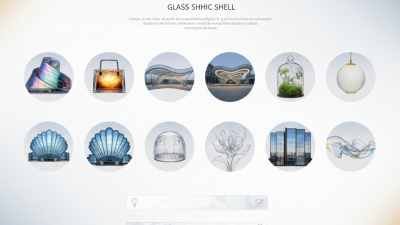
Choosing reliable Glass Shell suppliers in 2026 requires more than comparing catalog prices. Global buyers must examine material quality, production consistency, communication, and after-sales support. A polished website proves little.
This guide focuses on suppliers that can support demanding international projects. Their capabilities may include glass forming, surface finishing, custom dimensions, protective packaging, and documented quality inspections. Buyers should request samples before approving large orders. A small sample can reveal visible bubbles, uneven edges, weak coatings, or color differences under natural light.
Technical evidence matters. Look for clear specifications, factory photographs, inspection records, and realistic production lead times. Suppliers with experience serving overseas customers should explain export packaging, shipping risks, and replacement procedures. They should also communicate tolerances instead of promising perfection. That distinction is important.
No supplier is perfect. Even experienced manufacturers may face delays, material variation, or communication gaps. This guide therefore avoids treating rankings as permanent judgments. A company with strong pricing may lack customization experience, while a premium supplier may not fit every budget. Buyers must compare actual project requirements with verified capabilities.
The 2026 market may reward suppliers that combine stable production with responsive service. However, claims should be checked carefully. Ask direct questions. Keep written records. Confirm every critical detail before payment or production begins. The best Glass Shell supplier is not always the largest factory. It is the partner that delivers consistent quality, honest information, and practical support across the full purchasing process.
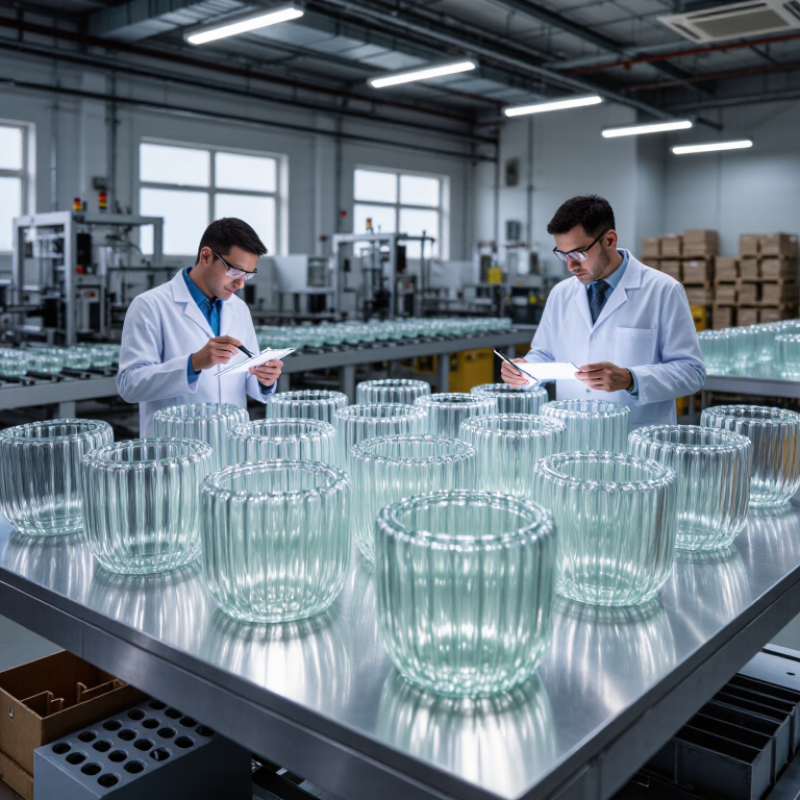
For global buyers, glass shells in 2026 will mainly use tempered, laminated, borosilicate, and curved glass. Each type serves a different risk profile. Tempered soda-lime glass suits protective housings and architectural enclosures. Laminated glass retains fragments after breakage. Borosilicate performs better under repeated thermal changes. Curved shells require tighter forming control and inspection.
The practical benchmark remains four times the strength of annealed glass. ASTM C1048 defines this tempered-strength expectation for suitable heat-treated glass. EN 12150-1 also requires controlled fragmentation and production testing. Common 2026 specifications include 4–12 millimetre thickness, edge polishing, visible-light transmission above 85%, and dimensional tolerance near ±1 millimetre. These figures need confirmation against the final drawing. Tolerance is not universal.
Market demand supports stricter sourcing. Fortune Business Insights estimates the global flat glass market reached about 121.8 billion dollars in 2023, with continued growth through 2032. The report also highlights construction, automotive, and energy applications. Buyers should request heat-soak testing, surface-stress records, optical inspection, and sample approval. A shell may pass a strength test yet fail at a sharp corner. That weakness is easy to miss. My field experience suggests packaging deserves equal attention, because edge damage often begins before installation. Supplier comparisons should include batch traceability, rejection rates, test laboratories, and replacement procedures. A low unit price can hide unstable curvature or inconsistent tempering.

Global glass output is often estimated near 130 million tonnes annually. That figure shows scale, but it is not perfectly comparable across regions. Some reports include flat glass, containers, and technical glass. Others use narrower definitions. Buyers should verify the measurement before comparing supplier capacity.
Asia provides the deepest furnace capacity and the broadest range of forming lines. Europe remains strong in precision glass, technical processing, and documented quality systems. North America offers reliable domestic supply for specialized shells and shorter regional deliveries. The Middle East and North Africa are gaining importance through new furnaces, lower-cost energy, and access to nearby construction markets. Capacity alone can mislead. A large plant may lack the tooling needed for a small, complex shell.
Trade routes strongly influence the final purchase price. Heavy glass shells often move through major seaports, then continue by rail or truck. A damaged pallet can erase a small freight advantage. Experienced buyers examine export packing, container loading, port congestion, and inland handling records. They also request furnace age, inspection methods, rejection rates, and recent production samples. These details reveal operational reliability better than a polished sales profile. Still, no supplier remains perfect. Seasonal shutdowns, energy interruptions, and changing freight schedules require backup planning. A practical sourcing decision weighs capacity, route stability, technical fit, and transparent evidence.
| Regional Supply Base | Estimated Annual Glass Output (million tonnes) |
Approx. Share of 130 Mt Global Output |
Main Production Strengths | Typical Glass-Shell Capabilities | Major Export Gateways and Trade Routes | Procurement Advantages | Key Buyer Considerations |
|---|---|---|---|---|---|---|---|
| China | ≈78 Mt | ≈60% | Flat glass Container glass Fiberglass Solar glass | High-volume molded glass, bottles, jars, appliance covers, lighting components, solar-glass products, and fabricated panels. Broad supplier depth from mass production to customized forming. | Coastal manufacturing is linked to Shanghai–Ningbo, Shenzhen–Yantian, Guangzhou–Nansha, Qingdao, Tianjin, and Xiamen. Common routes serve Southeast Asia, Europe, the Middle East, North America, and Africa. | Large production scale, extensive tooling capacity, competitive conversion costs, and strong availability of downstream processing. | Confirm furnace age, energy-efficiency performance, batch traceability, export documentation, mold ownership, and compliance with destination-market food-contact or safety rules. |
| European Union and United Kingdom | ≈22 Mt | ≈17% | Container glass Flat glass Specialty glass Technical glass | Premium container glass, laboratory and pharmaceutical packaging, architectural glass, precision tubing, technical glass, and high-specification molded components. | Intra-European road and short-sea shipping is highly developed. Deep-sea flows commonly use Rotterdam, Antwerp-Bruges, Hamburg, Bremerhaven, and Mediterranean ports for transatlantic, North African, and Middle Eastern delivery. | Strong quality systems, mature recycling networks, engineering expertise, and reliable regulatory documentation. | Higher energy and labor costs may increase prices. Buyers should evaluate carbon intensity, recycled-content availability, minimum order quantities, and lead times for custom molds. |
| North America | ≈13 Mt | ≈10% | Container glass Flat glass Fiberglass Specialty glass | Food and beverage containers, pharmaceutical packaging, fiberglass, architectural glazing, laboratory products, and engineered glass assemblies. | Domestic road and rail networks dominate. International shipments commonly move through Los Angeles–Long Beach, New York–New Jersey, Savannah, Houston, Vancouver, and Montreal. | Strong access to the U.S. and Canadian markets, established product liability systems, and dependable technical support for regulated applications. | Regional freight and labor costs can be high. Verify domestic-content requirements, recycled cullet availability, pallet specifications, and state or provincial environmental obligations. |
| South and Southeast Asia | ≈9 Mt | ≈7% | Container glass Flat glass Tableware Fiberglass | Cost-competitive bottles, jars, tableware, lighting glass, flat-glass products, and selected pharmaceutical and laboratory glass. | Major maritime connections use Singapore, Port Klang, Colombo, Nhava Sheva, Mundra, Chennai, Laem Chabang, and Tanjung Pelepas. Routes serve the Indian Ocean, Gulf, East Africa, Europe, and East Asia. | Competitive labor costs, expanding domestic demand, improving port connectivity, and growing capabilities in export-oriented production. | Assess furnace capacity, quality consistency between batches, port congestion exposure, monsoon-related scheduling, and the availability of local technical service. |
| Middle East and Africa | ≈4 Mt | ≈3% | Container glass Flat glass Tableware Architectural glass | Beverage and food containers, architectural and solar-related flat glass, tableware, and regionally supplied molded products. | Jebel Ali, Abu Dhabi, King Abdullah, Port Said, Tanger Med, Durban, and Mombasa connect regional production with the Gulf, Red Sea, Mediterranean, East Africa, and South Asia. | Proximity to Gulf, African, and Eastern Mediterranean markets; favorable access to silica, soda ash, and energy in selected locations. | Review import duties, inland transport reliability, power and fuel exposure, political-risk insurance, water availability, and port-to-warehouse handling requirements. |
| Latin America | ≈4 Mt | ≈3% | Container glass Flat glass Tableware Fiberglass | Beverage and food packaging, construction glass, tableware, household products, and selected fiberglass applications. | Santos, Paranaguá, Cartagena, Manzanillo, Veracruz, Callao, and Buenos Aires support regional trade and links to North America, Europe, and Asia. | Good access to large domestic consumer markets and regional trade corridors, with shorter delivery distances for the Americas. | Compare local production with imported supply, considering currency volatility, customs procedures, inland trucking, recycled cullet collection, and regional certification needs. |
For global buyers, a glass shell supplier must prove performance, not merely display polished samples.
ASTM C1048 sets measurable requirements for heat-treated flat glass. When fully tempered glass is specified, qualification files should show at least
69 MPa surface compression. Ask for recent test reports, glass thickness, treatment temperature, and batch identification.
Do not accept a sales sheet alone. ISO 9001 supports controlled production, but it does not certify glass strength. The ISO Survey 2022 recorded 1,265,216 valid ISO 9001 certificates worldwide , showing wide adoption but not automatic product reliability. Auditors should review corrective-action records, calibration logs, and traceability from furnace to shipment. Small details matter.
A practical supplier audit should test samples from different production lots. Check fragmentation, dimensional tolerance, optical distortion, coating adhesion, and edge quality. ASTM C1048 compliance can vary after cutting, drilling, or improper packing. This is often overlooked. Energy and cost reports from the glass industry also link stable furnace control with consistent output, yet supplier documents rarely explain this clearly. Buyers should request process data, not just certificates. Some qualification decisions will remain imperfect; sampling cannot reveal every future defect. That uncertainty deserves documentation, not optimistic assumptions.
For global buyers, a glass shell supplier should prove process capability, not just show polished samples.
In production audits, I check incoming glass, cutting accuracy, edge strength, and furnace records. Thickness must remain within the agreed tolerance across the entire panel. A center reading is not enough. Small variations can cause uneven bonding or stress during assembly. Measure both faces at multiple points. Record everything.
Flatness deserves equal attention. A shell may look straight under factory lighting yet rock on a granite table.
Suppliers should use calibrated gauges or optical measurement systems, with sampling plans linked to risk. Ask for actual yield data by batch, not a single annual percentage. A 98% yield sounds strong, but it may hide rework, downgraded pieces, or unreported sorting. Traceability matters. So does honest reporting.
Defect control should separate scratches, chips, bubbles, haze, warpage, and coating marks.
Each category needs a defined limit and inspection distance. Automated vision helps, but trained inspectors still catch irregular reflections. I have seen inspection standards change between shifts. That weakness is easy to miss.
Buyers should review gauge calibration, defect photos, corrective-action records, and retained samples before approving volume production. No process is perfect; unexplained yield swings deserve questions.
For global buyers, a glass shell supplier must prove more than attractive samples. Request a current ISO 14001 certificate, including its site address and audit scope. The ISO Survey 2023 recorded more than 500,000 certified environmental management systems worldwide, but certificates do not guarantee every factory operation is controlled. Verify the production location, expiry date, corrective actions, and recycled-glass purchasing records. Ask for monthly energy, water, and waste data. Numbers matter.
EU compliance requires a documented material trail. For food or cosmetic contact, suppliers should provide a Declaration of Compliance under Regulation (EC) No 1935/2004 and follow applicable good manufacturing practice rules. Testing may include hydrolytic resistance, thermal shock, dimensional checks, closure fit, and heavy-metal screening. Request accredited laboratory reports, not supplier-only spreadsheets. Under the EU Packaging and Packaging Waste Regulation, Regulation (EU) 2025/40, buyers should also review recyclability, packaging minimisation, labeling, and future reporting duties. Requirements can change.
Recycled content needs careful wording. European container-glass industry data has reported average recycled-cullet use above 50% in many markets, yet the percentage varies by color, furnace, and supply region. Demand batch-level evidence. Check whether “recycled content” means pre-consumer, post-consumer, or both. Ask for mass-balance calculations and contamination controls.
Small details expose weak systems. A green logo is not proof. Keep retain samples, inspect pallet protection, and record breakage after transport trials. I would not approve a supplier from one successful shipment alone. Supplier claims need independent testing and periodic review.